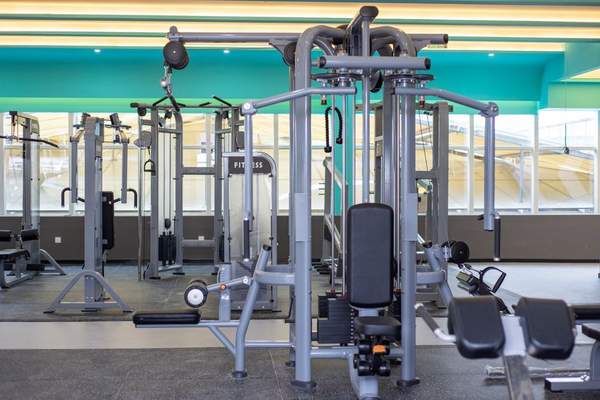
A circuit training workout should feel like a thoughtful sequence, not a race through random exercises. By moving between strength and cardio stations, you can work several muscle groups, elevate your breathing rate and keep a session relatively compact. It works especially well at home, where a small area and simple equipment can be enough.
The difference between a balanced circuit and an exhausting one is planning. Choose movements that complement each other, put them in a sensible order and allow enough recovery to maintain good technique.
Build your circuit around movement patterns
Start with five to seven stations, each serving a purpose. A well-rounded selection includes a squat or lunge, a hip hinge or bridge, an upper-body push, an upper-body pull, a core exercise and one or two cardio movements. That covers more ground than repeating several variations of the same squat.
Choose practical strength exercises
Chair squats, glute bridges, incline push-ups and resistance-band rows are accessible circuit training exercises. Match each movement to your ability: a counter push-up might allow better control than a floor push-up, for example. Use secure equipment, and avoid makeshift band anchors that could slip.
Move through a comfortable range and stop a set when your form begins to break down. A slower repetition performed well is more useful than squeezing in extra rushed ones.
Pick cardio you can sustain
For a circuit workout at home, brisk marching, side steps, step jacks or low step-ups are easy to arrange. Jumping is optional. Aim to breathe harder without losing control; the cardio station should leave you able to perform the next strength movement properly.
If impact bothers your joints, use lower-impact steps. You can also make the cardio station gentler without making the overall session pointless.
Put exercises in an order that protects technique
A useful strength cardio circuit alternates muscle demands. You might follow squats with push-ups, add moderate marching, then perform rows and glute bridges. This prevents one tired body part from dominating every station.
Place unfamiliar or technically demanding movements early, before heavy breathing makes concentration harder. Do not rush from vigorous cardio straight into a lift that requires careful setup. Rest long enough to regain control, even if that means pausing the timer.
Alternating cardio and strength is an option, not a requirement. Beginners sometimes do better with two or three controlled strength stations before a cardio segment. Choose the arrangement that lets you move consistently and safely.
Choose work and rest intervals
For a beginner circuit, 20 to 30 seconds of exercise followed by 20 to 40 seconds of recovery is a reasonable trial. You can also count repetitions, such as eight steady squats or six controlled push-ups. Repetition targets often work better when learning movement technique.
Rest includes walking to the next station, adjusting equipment and catching your breath. If you cannot speak a short sentence during moderate cardio, slow down. As fitness improves, you can add time or resistance, but avoid changing several variables simultaneously.
Try this balanced home circuit
Clear enough floor space to move safely. Warm up for four minutes with gentle marching, shoulder circles and easy squats. For each station, work for 30 seconds and recover or transition for 20 seconds. Complete two rounds, resting about one minute between them.
Squat or chair sit-to-stand: Lower under control, keep your feet stable and stand tall. A chair offers a clear, repeatable depth.
Incline push-up: Use a stable counter or other secure surface. Keep your trunk aligned and bend your elbows without collapsing.
Brisk march: Move your arms and legs at a sustainable pace. Increase speed only while your breathing remains controlled.
Resistance-band row: With a securely anchored band, draw your elbows back and avoid shrugging your shoulders. Check the anchor before every round.
Glute bridge: Lie with bent knees, press through your feet and lift your hips without excessively arching your back.
Step jacks: Step out and back one foot at a time while moving your arms. This is a lower-impact alternative to jumping jacks.
Dead bug: On your back, extend an opposite arm and leg slowly. Shorten the reach if you cannot keep your trunk steady.
Seven 50-second stations take about six minutes per round. With the round break, warm-up and a short cool-down walk, the whole workout takes roughly 20 minutes. No resistance band? Keep the rest of the circuit and add a pulling exercise later when suitable equipment is available, rather than substituting an unsafe furniture-based movement.
Adapt the circuit to your goal
For strength, prioritize controlled repetitions and enough rest to maintain their quality. For cardiovascular conditioning, keep the cardio stations steady and repeatable. If your schedule is tight, do fewer rounds instead of speeding through movements.
Your limiting factor offers useful feedback. If your legs fatigue before your breathing increases, simplify the squats. If you are too winded to row with control, ease the march or extend the break. Balance does not mean every station must feel equally difficult.
For additional practice, explore bodyweight exercise technique, low-impact cardio ideas and a beginner weekly workout plan as related topics. Those skills make it easier to adjust the circuit to your needs.
Progress without chasing exhaustion
Repeat the same circuit for a couple of weeks. First notice whether you can finish each station with consistent technique. Then change one element: add a round, increase resistance slightly or extend a work interval by five seconds. Compare how you recover before progressing again.
Leave recovery between challenging full-body workouts. Walking and gentle mobility can fill other days. The CDC recommends adults work toward at least 150 minutes of moderate aerobic activity each week plus muscle-strengthening activity on two or more days. A circuit can contribute to both goals, but a single short session does not automatically meet them.
Frequently asked questions
Is circuit training suitable for beginners?
Yes. Use familiar movements, comfortable effort and generous rest. One or two rounds may be enough initially. Add complexity only after the basic routine feels manageable.
Can I do a circuit without equipment?
Yes. Chair squats, incline push-ups, glute bridges, marching and core work need little equipment. Pulling movements are harder to cover without a band or weight, so plan to add one when possible.
Is circuit training the same as HIIT?
No. Circuit training describes a sequence of exercises; HIIT involves repeated high-intensity efforts and recovery. A circuit can be moderate and need not involve all-out effort.
How often should I do a circuit?
Two nonconsecutive full-body sessions per week can be a useful starting point, depending on intensity and recovery. Build gradually. If an injury or health condition affects your exercise choices, seek personalized professional guidance.
Make the format work for you
An effective circuit training workout combines complementary movement patterns, an achievable cardio pace and realistic rest periods. Start with a simple version you can repeat, then progress a little at a time. When the sequence feels balanced, it becomes a practical exercise habit rather than a test of how exhausted you can get.