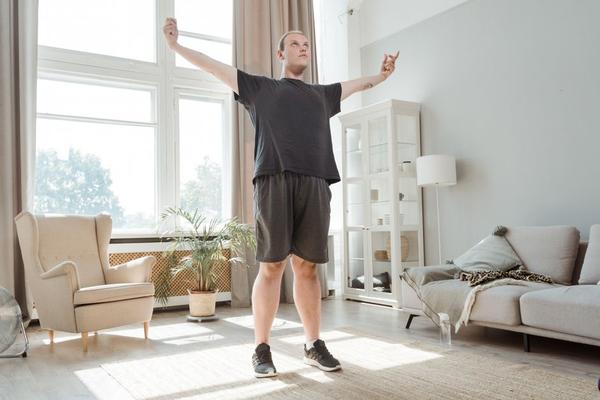
A full body workout at home does not need expensive equipment or an hour of free time. The key is to cover the ways your body moves every day: sitting and standing, bending at the hips, pushing, pulling, balancing and bracing. A thoughtful routine trains your legs, upper body and core without turning exercise into a complicated project.
This beginner-friendly plan combines bodyweight movements with optional household resistance. Start with manageable variations and work at a controlled pace. Consistency matters more than how exhausted you feel afterward.
What makes a home workout truly full body?
Doing many exercises is not the same as training your whole body. A balanced full body home workout includes a squat or lunge, a hip-dominant movement, an upper-body push, an upper-body pull and core stability work. Those movement patterns help prevent a common mistake: doing plenty of squats and crunches while overlooking the back and shoulders.
Clear a little floor space and gather a sturdy chair or counter. A securely packed backpack or two light water bottles are optional. Avoid rolling chairs, wobbly tables and improvised overhead anchors.
Warm up before your first set
Spend about five minutes marching in place, circling your shoulders, gently turning your trunk and practicing easy squats and hip hinges. Begin slowly, then increase your range of motion as you feel comfortable. The goal is to prepare for movement, not tire yourself out.
Start with one set of each exercise. Choose controlled repetitions over speed, and stop if you experience sharp pain, dizziness or unusual symptoms.
Seven total body exercises for a balanced routine
1. Chair squats for your thighs and hips
Stand with feet roughly hip-width apart in front of a sturdy chair. Push your hips back, bend your knees and gently touch the seat before standing. Keep your feet planted and let your knees track toward your toes. Try 8–12 repetitions. Use a higher seat or hold a stable counter if balance is difficult.
2. Incline push-ups for your chest and arms
Place your hands on a stable kitchen counter, step back and keep your body in a straight line. Bend your elbows to bring your chest toward the edge, then push away. Avoid letting your hips sag. Complete 6–12 repetitions. A higher surface makes this easier than floor push-ups, which you can work toward later.
3. Glute bridges for your hips
Lie on your back with knees bent, feet flat and arms beside you. Gently tighten your abdomen and lift your hips until your shoulders, hips and knees form a comfortable line. Lower slowly for 10–15 repetitions. This trains hip extension without weights. Avoid arching your lower back to reach extra height.
4. Backpack rows for your back
Securely close a small backpack with a modest load inside. With knees soft, hinge at the hips while keeping your back comfortably neutral. Pull the backpack toward your lower ribs, then lower slowly for 8–12 repetitions. You can support one hand on a sturdy surface and row one arm at a time. Without suitable resistance, try gentle prone arm raises, although these are not an equivalent strength challenge.
5. Reverse lunges for single-leg control
Stand beside a counter for balance. Step one foot backward, bend both knees as far as comfortable and return to standing. Alternate legs for 6–10 repetitions per side. A short step and shallow bend are fine. If lunges irritate your knees or feel unstable, use chair squats instead and build balance gradually.
6. Light overhead presses for your shoulders
Hold light water bottles near shoulder height with palms facing comfortably forward or inward. Press upward within a pain-free range without leaning back, then lower slowly. Try 8–12 repetitions. If overhead movement bothers your shoulders, skip this exercise or choose a comfortable wall push-up variation.
7. Dead bugs for a steadier core
Lie on your back with knees above your hips and arms pointing upward. Keep your ribs relaxed as you extend one leg and the opposite arm, then return and switch sides. Try 6–10 repetitions per side. Shorten the reach if your lower back arches. This teaches trunk control for squats, rows and everyday lifting.
How to organize your home strength workout
Follow the exercises in the order above, resting approximately 45–90 seconds when necessary. Take longer after demanding sets to preserve good technique. One round may take around 15–25 minutes including transitions; two rounds could take 25–40 minutes, depending on rest and experience.
Imagine finishing work at home, warming up after closing your laptop and completing one round before dinner on Monday and Thursday. You could walk briskly on other days. It is a realistic beginner fitness routine, not a demand to train hard daily. Allow at least a day between challenging sessions targeting the same muscles.
Strength sets should be deliberate rather than rushed simply to raise your heart rate. Walking, cycling or other aerobic activity can complement your full-body sessions through the week.
Build strength by changing one thing at a time
Pick a variation that feels challenging near the end of a set while leaving about two or three technically sound repetitions available. When a movement becomes easier across several sessions, add a few repetitions, a second set or a little resistance. For incline push-ups, moving from a counter to a slightly lower sturdy surface increases difficulty without extra equipment.
Keep a short phone note with exercises, repetitions, sets and adjustments. After a few weeks, you may notice deeper squats or easier rows. When you want focused practice, a lower-body strength routine, a guide to push-up progressions and a beginner core workout make natural next steps.
Adult physical activity guidelines recommend strengthening all major muscle groups at least twice a week, along with regular aerobic movement. People with injuries or relevant health conditions may need individualized advice from a qualified healthcare professional before changing their routine.
Frequently asked questions
Can beginners do a full body workout at home every day?
You can move every day, but challenging strength sessions for the same muscles need recovery. Start with two nonconsecutive full-body sessions weekly. On other days, choose walking, easy mobility work or activities you enjoy.
Do I need dumbbells to build strength at home?
No. Squats, incline push-ups, lunges and bridges can all become challenging with controlled technique. As you improve, resistance bands or suitable weights can make pulling exercises and gradual increases in difficulty easier.
How long should a full-body session last?
A focused beginner session can take roughly 20–40 minutes with a warm-up and rests. Completing quality sets for your main movement patterns matters more than meeting a particular time target.
What if an exercise feels too hard?
Reduce its range of motion, choose a supported variation or do fewer repetitions. Stop if it causes pain. Building a routine you can repeat is more useful than forcing the hardest version immediately.
Keep the routine simple enough to repeat
The best plan is one you can sustain and gradually improve. Cover a squat, a hip movement, pushing, pulling and core work; recover between sessions and track small gains. Your living room can be enough to build a strong foundation, one well-executed session at a time.